




















Extreme Unionism and Res Judicata
Unsurprisingly, today at the Court of Session Lord Young refused to lift his suspension or “sist” of the Scottish judicial review of the proscription of Palestine Action. He did however grant us leave to appeal against this decision. What was surprising was an extreme extension of the UK government’s argument. The UK government stated that […] The post Extreme Unionism and Res Judicata appeared first on Craig Murray.

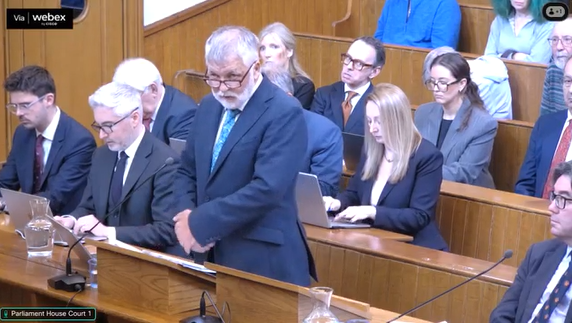
Unsurprisingly, today at the Court of Session Lord Young refused to lift his suspension or “sist” of the Scottish judicial review of the proscription of Palestine Action. He did however grant us leave to appeal against this decision.
What was surprising was an extreme extension of the UK government’s argument.
The UK government stated that Huda Ammori in England and Craig Murray in Scotland are the same litigant, because both are in essence representing Palestine Action. This case therefore is Res Judicata – a matter already judged. It has been decided in London by the Court of Appeal of England and Wales.
This is an astonishing claim. A matter decided in another jurisdiction cannot be Res Judicata. The Labour government is here asserting in terms that the High Court of England and Wales has jurisdiction over Scotland.
This would of course be in direct breach of the Act and Treaties of Union. That this is no misunderstanding was underlined in court by use of the words “Antiquarian” and “Desuetude” in relation to “18th Century legislation”.
The Crown had already made the argument of “comity” in the previous hearings, and Lord Young had accepted the principle of “comity” in his ruling suspending the Scottish judicial review. “Comity” is the principle that neighbouring jurisdictions should seek to adopt the same approach out of mutual respect. But here the Labour government went much further and is denying the right of the Scottish courts to decide differently.
The UK government did not merely invite the Court of Session to follow the English decision out of comity. It argued that the matter is already res judicata — that because both proceedings are, in substance, brought by Palestine Action, the Court of Appeal’s ruling in England has already determined the issue for Scotland as well. This is a much more radical position than has normally been taken between the two jurisdictions.
If accepted, this argument would mean that the finality of Scottish judicial review proceedings in reserved matters could be determined in London. That would represent a significant practical shift in the relationship between the two legal systems that have coexisted since the Union.
This is of course consistent with Andy Burnham’s declared intention to reduce the powers of the Scottish parliament and introduce more direct funding from London to Scottish councils, and his questioning of the Barnett financial settlement. The Labour Party is adopting aggressive unionism.
Incidentally Lord Young today denied that “comity” had been his primary reason for suspending the judicial review. Having sat through that hearing and ruling, I have to say, you could have fooled me. It appeared plainly his primary reason. If that wasn’t it, I have no idea what his motive was. Pretty well the only other reason he gave was to save money on the cost of a judicial review.
Which I suspect is a lot less than the cost of banging up in jail a lot of mostly elderly people for the “terrorism” offence of holding placards.
This case has revealed in startling detail the contempt for Scotland of the Labour Party. It was demonstrated brazenly when Nepo baby Catherine Smith KC, Advocate General for Scotland (a UK govt minister) told the last hearing that CONTEST Scotland, the Scottish government’s counter terrorism strategy organisation which includes Police Scotland, the Crown Office and the security services, was a “local board” whose opinion that Palestine Action did not meet the bar of terrorism could be ignored.
The disclosure papers reveal that nobody in Scotland was consulted by the Home Office before the proscription of Palestine Action. The Israeli Embassy were consulted, but the Scottish government were not. The arms industry was consulted, but Police Scotland were not. No civil society organisation in Scotland was consulted.
Yet policing and human rights are not reserved matters.
That lack of any consultation in Scotland is going to be a key point at the actual review, when we eventually get the Scottish judicial review.
Lord Young did not today accept the res judicata argument – that won’t even get to be heard unless we eventually get out of the endless procedural thicket into which he has deliberately steered the case.
We gained ground today. Lord Young clarified that the Scottish judicial review is paused until the Supreme Court decides whether it will hear the Ammori appeal, after which our judicial appeal may resume.
What the purpose of such a pause could be, other to allow the Crown then to argue there is not time for a Scottish judicial review before the Supreme Court hearing, is entirely unclear to me. Our KC, Aidan O’Neal, at this point became as furious with the judge as I have ever seen a KC exhibit in court, decrying the “delay, delay, delay”.
But unless the Establishment stitches up a very quick Supreme Court hearing, there is a better chance we may finally get the Scottish judicial review than appeared likely yesterday. We also have the chance to appeal to get the Scottish judicial review running.
I have to say I am furious at the total lack of interest shown by the Scottish government and the SNP in this case. It is addressing fundamental constitutional questions and the UK government is directly seeking a maximalist unionist gain in reducing the autonomy of Scottish courts from London. But the Scottish government – which could have intervened in the case – has shown no interest whatsoever and is just pretending it is not happening.
The Scottish government has also had the ability this whole time to instruct Police Scotland that arresting people for holding placards is not a priority “crime”, and they should concentrate on burglary, rape and other such violence. But they have not done that either.
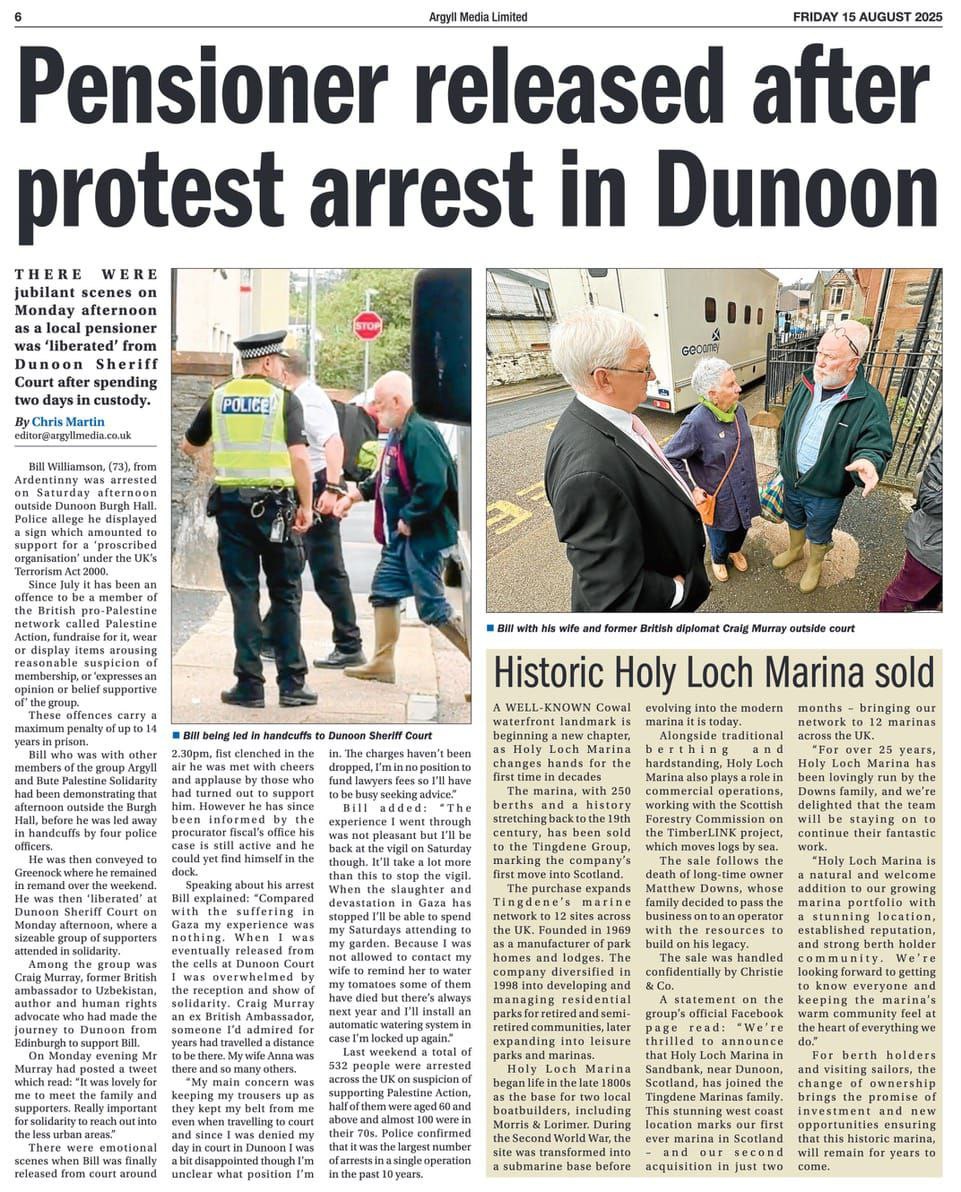
One consequence of this just being ordinary citizens against the unlimited resources of the state, and of the continued use of procedural devices to postpone the judicial review, is that we have simply run out of resources. The legal team told me on the steps of the court after today’s hearing that we simply do not have the funds to appeal against today’s decision.
In short, unless there is a substantial uptick in crowdfunding I am going to have to throw in the towel. I am very aware we cannot expect the same people to give again and again – and a great many of the 1800 people who donated so far are not in a good financial position themselves. It is also a real limitation that, as no big organisation is with us, the only real outreach is my own heavily shadowbanned social media.
But somehow we need to fight this.
Again please contribute if you can but do not contribute if it causes you difficulty. If you know people who are able to afford to help and likely to be sympathetic, please do contact them and ask their assistance. We are trying to keep a lot of very good people out of prison.
You can donate through the link via Crowd Justice, which goes straight to the lawyers, or through this blog.
https://www.crowdjustice.com/case/scottish-challenge-to-proscription/
Alternatively by bank transfer:
Account name
MURRAY CJ
Account number 3 2 1 5 0 9 6 2
Sort code 6 0 – 4 0 – 0 5
IBAN GB98NWBK60400532150962
BIC NWBKGB2L
Bank address NatWest, PO Box 414, 38 Strand, London, WC2H 5JB
Or crypto:
Bitcoin: bc1q3sdm60rshynxtvfnkhhqjn83vk3e3nyw78cjx9
Ethereum/ERC-20: 0x764a6054783e86C321Cb8208442477d24834861a
The post Extreme Unionism and Res Judicata appeared first on Craig Murray.
What's Your Reaction?